Pumps, filters, heaters, salt cells, lights, and plumbing leaks — diagnosed on site and fixed the same visit whenever parts allow. Honest pricing, no upsell, and parts chosen to survive Phoenix's brutal water.
Phoenix's tap water runs 300 to 900 parts per million calcium hardness depending on your neighborhood. Some areas that pull groundwater exceed 1,000. The Colorado River and Salt River sources that feed the Valley carry some of the highest mineral loads of any municipal supply in the country, and every day the sun evaporates water off the pool surface, the calcium that stays behind concentrates further.
That calcium coats everything. Heater heat exchangers scale shut in half the time they would in a 200 ppm city. Salt cell plates crust over and lose output within two years instead of five. Pump impellers narrow and lose flow. Filter grids and cartridges load with calcium that backwashing alone cannot remove. Equipment rated for eight or ten years of service in a normal climate may last four or five here — and that is with good maintenance. Without it, the numbers are worse.
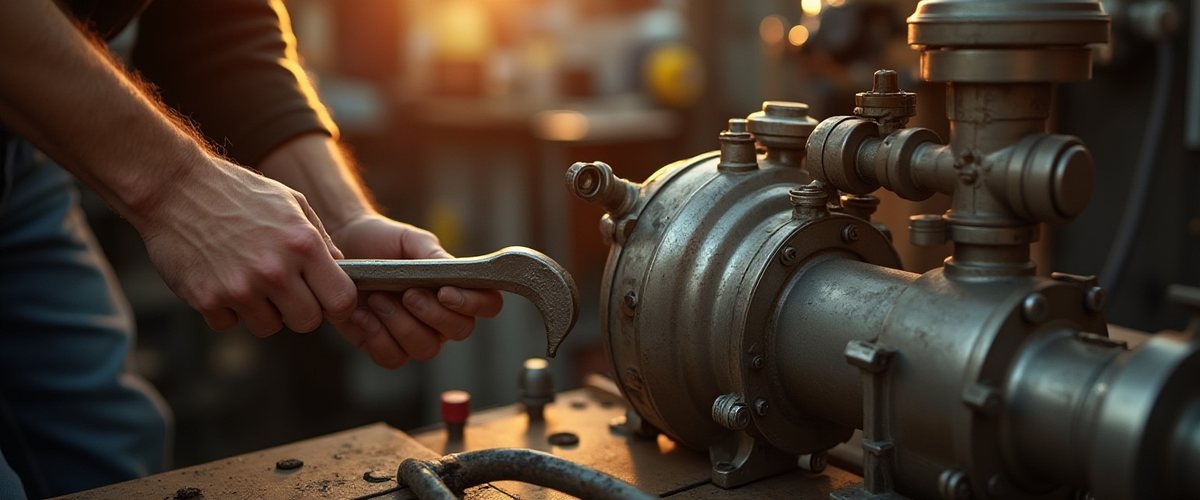
Calcium buildup inside a pump housing — routine in Phoenix's 300–900 ppm water and the most common cause of reduced flow.
What Gets Repaired
Pumps and Motors
A noisy pump usually means worn bearings, and replacing the motor is faster and cheaper than replacing the whole pump body. If the motor costs more than half a new variable-speed unit, a good pool service will tell you — the energy savings in Phoenix's year-round season pay back the difference fast. Pentair, Hayward and Jandy motors are common, and a motor swap can often be finished in a single visit.
Filters
Cartridge filters clog with calcium and body oils; DE filters develop torn grids; sand filters channel after four or five years. A good pool service cleans, rebuilds, or replaces based on what makes sense for the filter's age. If your pressure gauge reads eight to ten PSI above its clean baseline, the filter needs attention before it puts back-pressure on the pump.
Heaters
Gas heaters in Phoenix fail most often at the heat exchanger, where calcium scale insulates the metal from the water and forces the burner to run hotter. Igniter modules, pressure switches, and thermistors are repair items that cost far less than a new heater. A cracked exchanger usually means replacement — but a good pool service diagnoses before a good pool service quotes, and a good pool service does not push a replacement when a $200 part solves the problem.
Salt Chlorine Generators
A salt cell coated with calcium produces less chlorine, and the control board compensates by running the cell harder. In Phoenix's water, this cycle shortens cell life dramatically. A good pool service acid-washes cells on site and test output against the manufacturer's baseline. If cleaning no longer restores full output, a good pool service replaces the cell and talk to you about water chemistry adjustments to extend the new one's life.
Lights and Plumbing
Pool lights are straightforward — pull the fixture, replace the bulb or LED, reseal the gasket, test. Plumbing leaks require pressure testing to isolate the line, then exposing and repairing the section. A good pool service should be straight about what underground plumbing work involves before a good pool service starts digging.
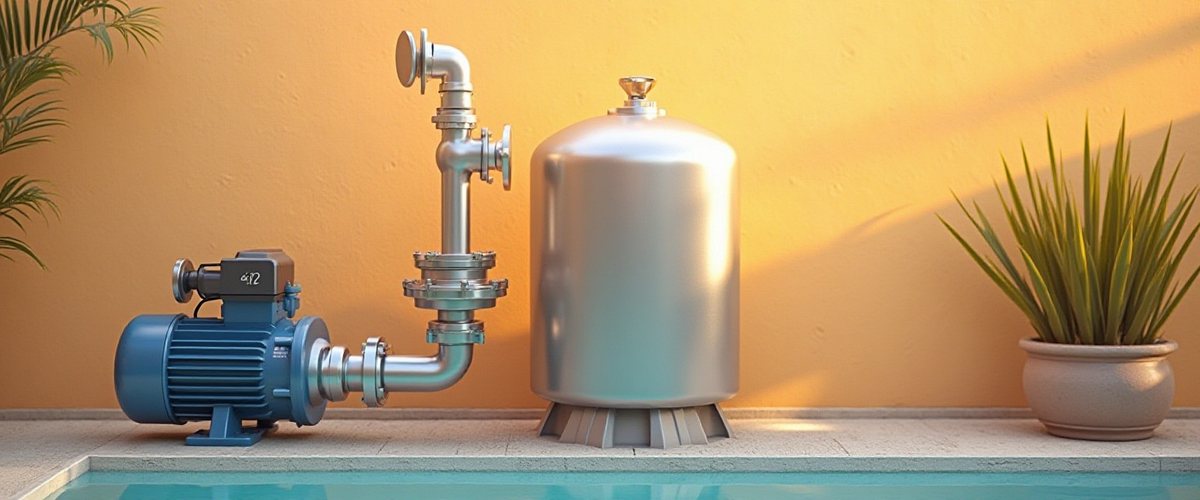
Scale on a heat exchanger — the most common heater failure in the Valley's extreme water hardness.
How a Repair Visit Works
You call, describe the symptom, and a good pool service schedules — usually within a day or two, same day when possible. The technician diagnoses on site, shows you what he found, and gives you a price before any work starts. If the repair can be done that visit, it gets done. If a part needs to be ordered, a good pool service tells you the lead time and comes back. The cost of the part and the cost of the labor are separate numbers — no bundled markup.
Across the Valley
A good pool service repairs pool equipment across the Phoenix metro — central Phoenix, North Phoenix, Scottsdale, Mesa, Gilbert, Chandler, Glendale, Peoria, and Surprise. Call with the symptom and a good pool service will tell you what it likely is before a good pool service comes out.
Pool Repair Questions
How much does a pool pump replacement cost in Phoenix?
A motor-only swap on a single-speed pump runs $250 to $500 installed. A full single-speed pump replacement is $450 to $800. A variable-speed pump replacement is $1,200 to $1,800 installed, but it cuts energy costs by 60 to 80 percent — in Phoenix's year-round pool season, that usually pays for itself within 12 to 18 months.
Why does pool equipment fail faster in Phoenix than other cities?
Phoenix tap water runs 300 to 900 ppm calcium hardness — two to four times what equipment manufacturers recommend. That calcium scales heater exchangers, salt cells, and pump internals faster than anywhere else. Add year-round equipment operation, ambient temperatures above 115 degrees in summer, and constant UV degradation of seals and fittings, and a pump rated for eight years may last four to five here.
Can you repair a pool heater, or does it need to be replaced?
It depends on the failure. Igniter modules, pressure switches, and thermistors are common heater repairs that cost far less than a new unit. A cracked heat exchanger — usually caused by years of scale buildup in Phoenix's extreme water — generally means replacement because the repair cost approaches the price of a new heater.
What is a variable-speed pump and is it worth it in Phoenix?
A variable-speed pump runs at different speeds depending on the task — low for daily circulation, high for vacuuming or running a spa. Because it runs on low most of the time, it uses 60 to 80 percent less electricity. In Phoenix, where pools run twelve months a year, the monthly savings are substantial. Arizona also requires variable-speed pumps on new construction and certain replacements under the DOE's 2021 rule.
Do you service the entire Phoenix metro?
Yes. A good pool service repairs pool equipment across the Valley — central Phoenix, North Phoenix, Scottsdale, Mesa, Gilbert, Chandler, Glendale, Peoria, and Surprise. Call with the symptom and a good pool service will tell you what it likely is before a good pool service comes out.
Pool Not Running Right?
Call and describe the noise or the symptom. A good pool service will tell you what it likely is, come diagnose on site, and give you a price before touching anything.